How to Measure AI Adoption, Performance, and ROI With 12 KPIs

本文由「How to Measure AI Adoption, Performance, and ROI With 12 KPIs」的公开内容整理,完整内容与后续更新请点击文末链接阅读原文。
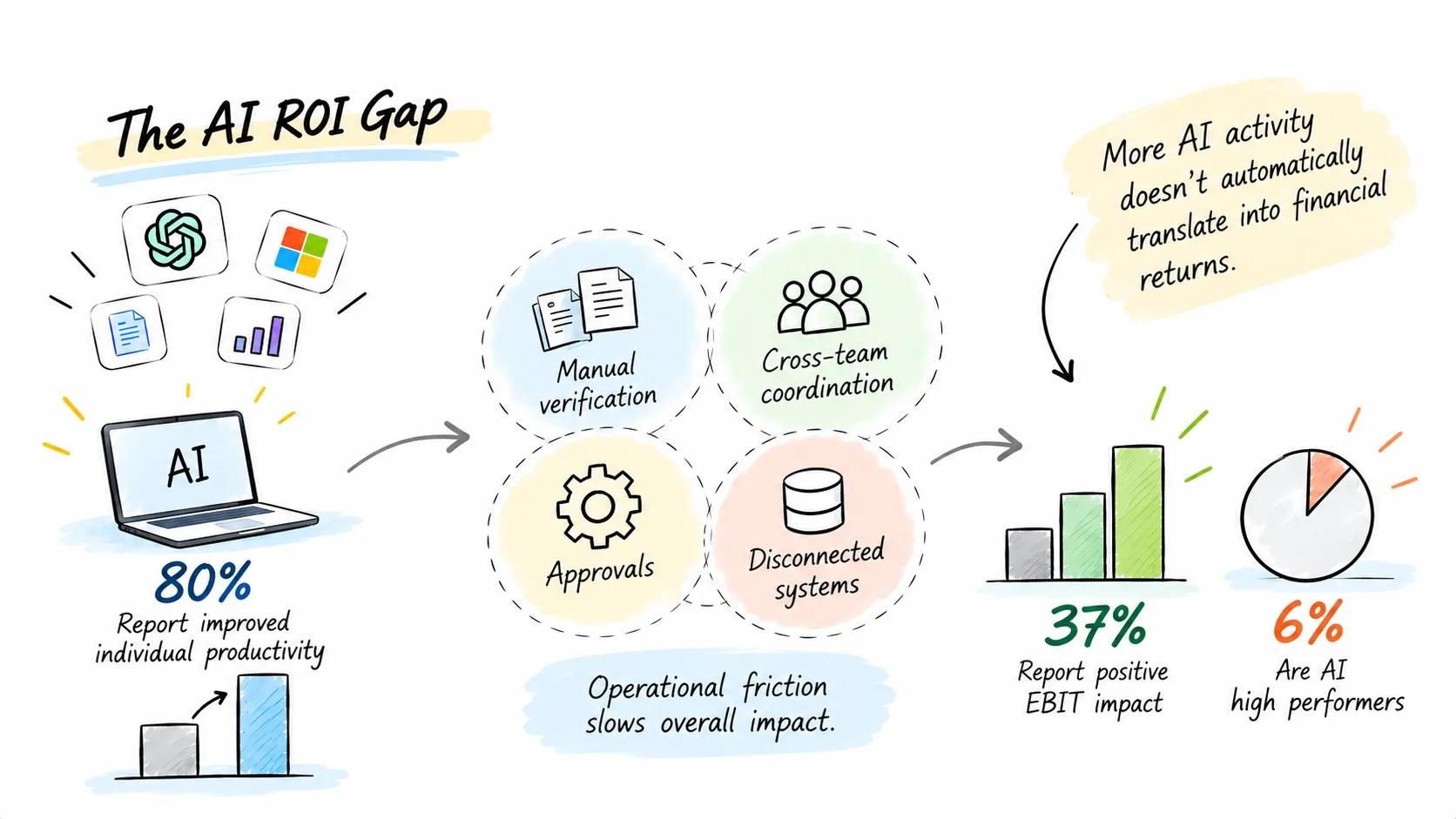
- The AI ROI GapImage by Weiwei HuAI ROI GapCompanies are investing heavily in AI today. When it comes to AI transformation, many start by rolling out more AI tools and solutions, encouraging employees to use them, and focusing on AI adoption and productivity improvement as measures of success. But even when employees use AI more and complete their day-to-day tasks faster, the end-to-end business process can still take a long time to complete.McKinsey's The State of AI in 2026: On the Road to ROI highlights this gap. While 80% of respondents said AI improved their individual productivity, 37% reported a positive impact on their organization's EBIT, and only 6% qualified as AI high performers.Another HBR study of 300 employees and frontline managers found people spent about 37% of their time coordinating work, compared with 44% doing the actual work.These findings raise an important question: How do we know which AI investments are improving business performance and delivering meaningful financial returns?
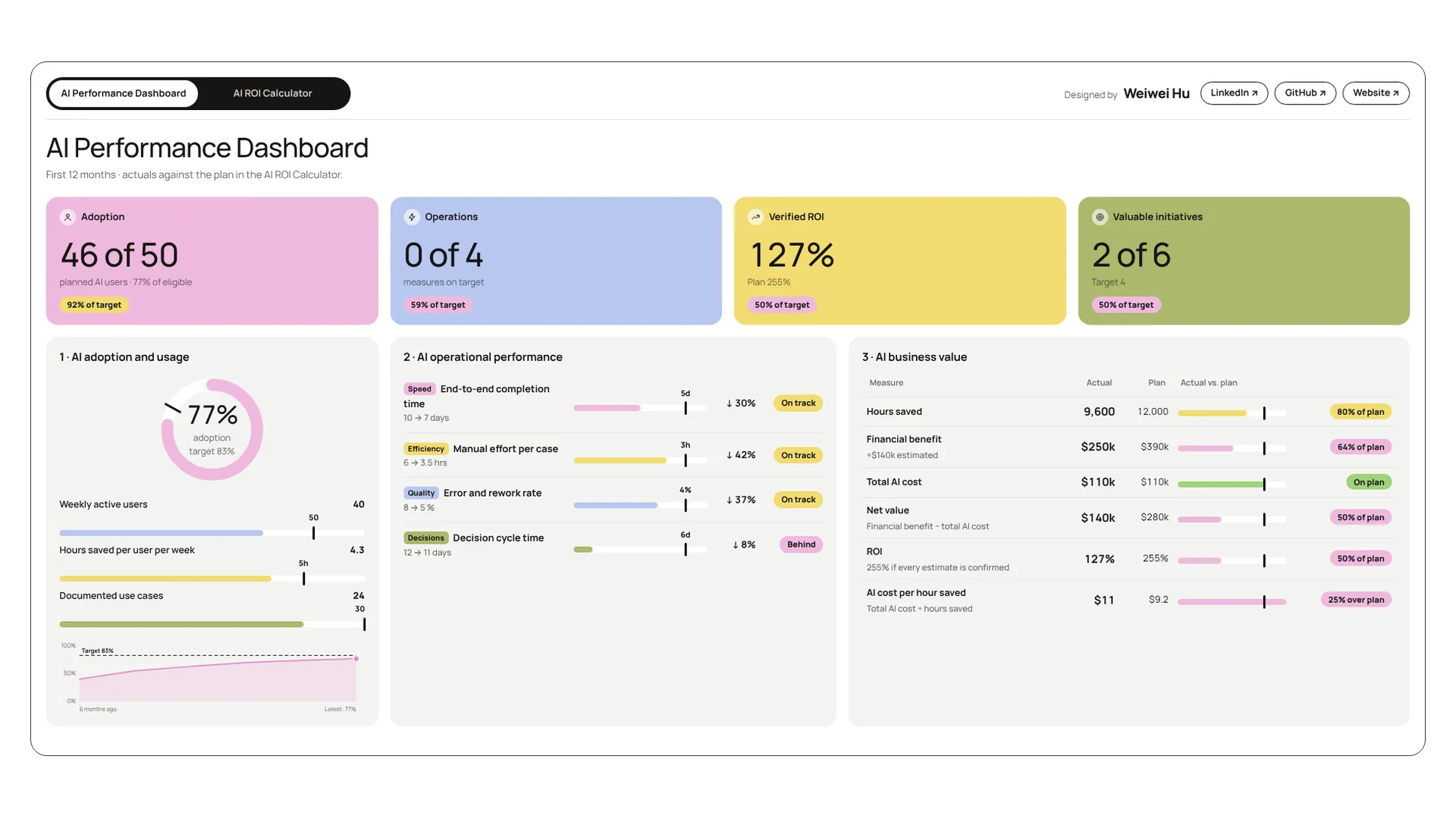
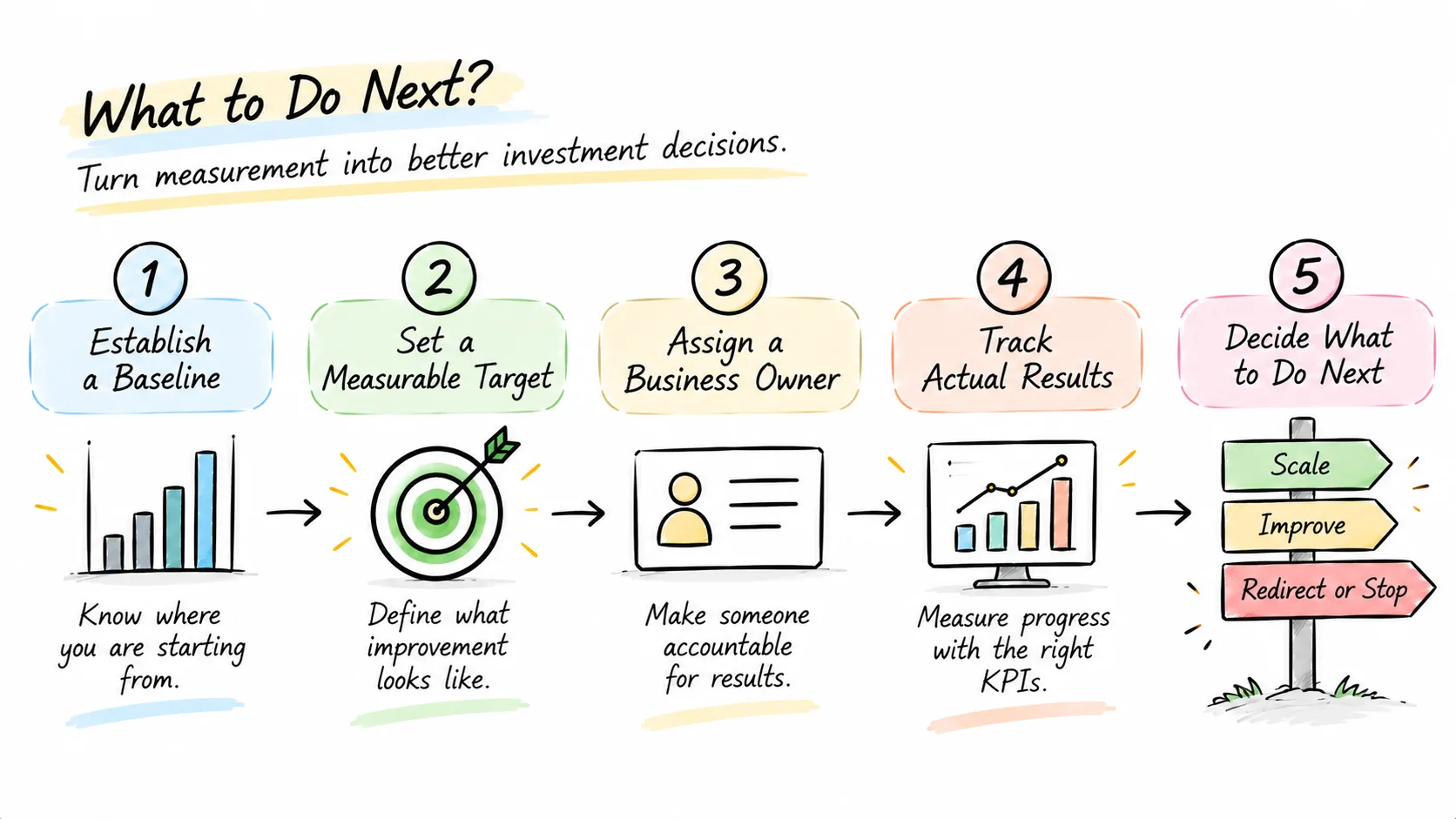
Without measurable KPIs, it's difficult to determine what's working, what's delivering value, and where to invest next.···2. A Practical KPI Framework for AI ImpactOne thing I've learned from working across AI transformation strategy and business operations for large enterprises is that measuring AI success requires looking beyond what the technology can do. Whether we're helping employees use AI in their daily work or deploying AI across business workflows and processes, we need to understand what improves and if those improvements translate into financial results (see McKinsey's Rewired, 2nd ed.).So I'd recommend adopting the following three levels of AI performance measurement across your AI portfolio:AI Adoption & Usage: Are your employees using AI consistently?
AI-Driven Operational Performance: Is AI improving how the business operates?
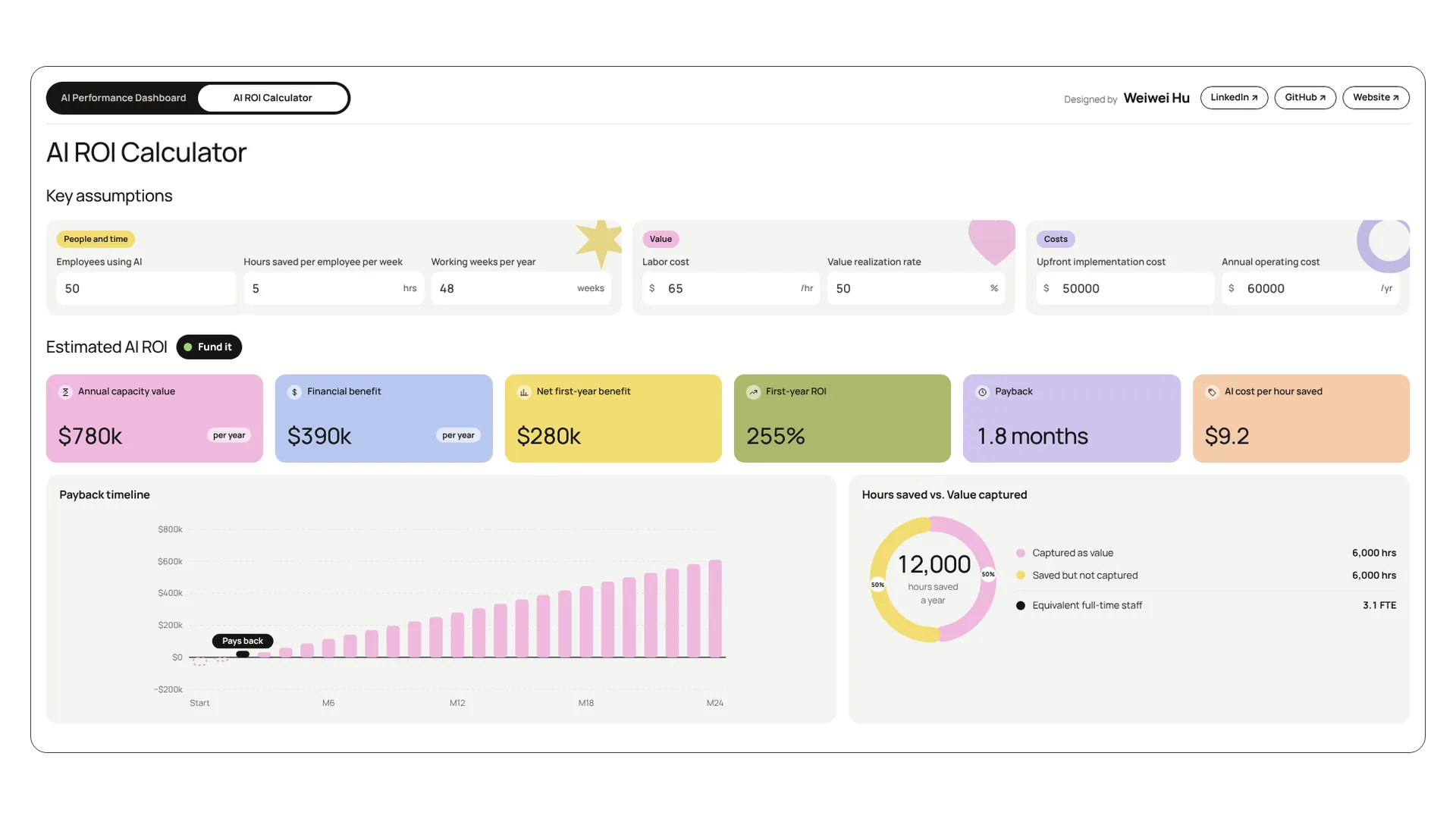
AI Business Value & ROI: Are those improvements generating measurable financial returns?
Image by Weiwei Hu2.1 AI Adoption & UsageAI adoption reflects how people actively use AI tools and find useful ways to apply it to their work. There are four key measures I would focus on:Adoption Rate: Percentage of eligible employees actively using AI.Active Usage: Number of employees using AI weekly or monthly.Usage Frequency: How consistently employees use AI in their work.Success Stories & Use Cases: Number of documented examples of AI applied to real work, with evidence of useful results.In one of the AI learning initiatives, our adoption grew gradually as we moved from introducing AI tools to hands-on practical problem-solving, and sharing successful use cases across teams.We measure this progress through active participation, practical application, and continued usage, then evaluate whether the productivity gains lead to business process improvements. As a result, our AI adoption rate reached 95%, with more than nine hours of self-reported productivity lift per week.2.2 AI-Driven Operational PerformanceDoes AI improve how the business operates?
In one project, a data analyst used Databricks Genie Code to reduce the analytics work that typically took 2-4 hours to under 5 minutes. This is more than 24× faster. AI helped explore data, test hypotheses, investigate unexpected findings, and produce a reproducible notebook with analysis and recommendations. However, the HBR study showed AI can save hours on individual tasks while the overall process still takes time because of coordination, manual verification, and approvals across multiple teams.These are the four operational KPIs I would focus on:End-to-End Completion Time (Speed): How quickly the business completes a process.Manual Work Reduction & Employee Productivity Lift (Efficiency): Human effort required, hours saved, and additional work completed with the same resources.Error and Rework Reduction (Quality): How accurately work is completed.Decision Timeliness and Quality (Effectiveness): How quickly and reliably decisions are made.Together,
本文基于 Towards Data Science 的公开内容,由 AI 辅助整理改写后发布。
原标题:How to Measure AI Adoption, Performance, and ROI With 12 KPIs
阅读原文